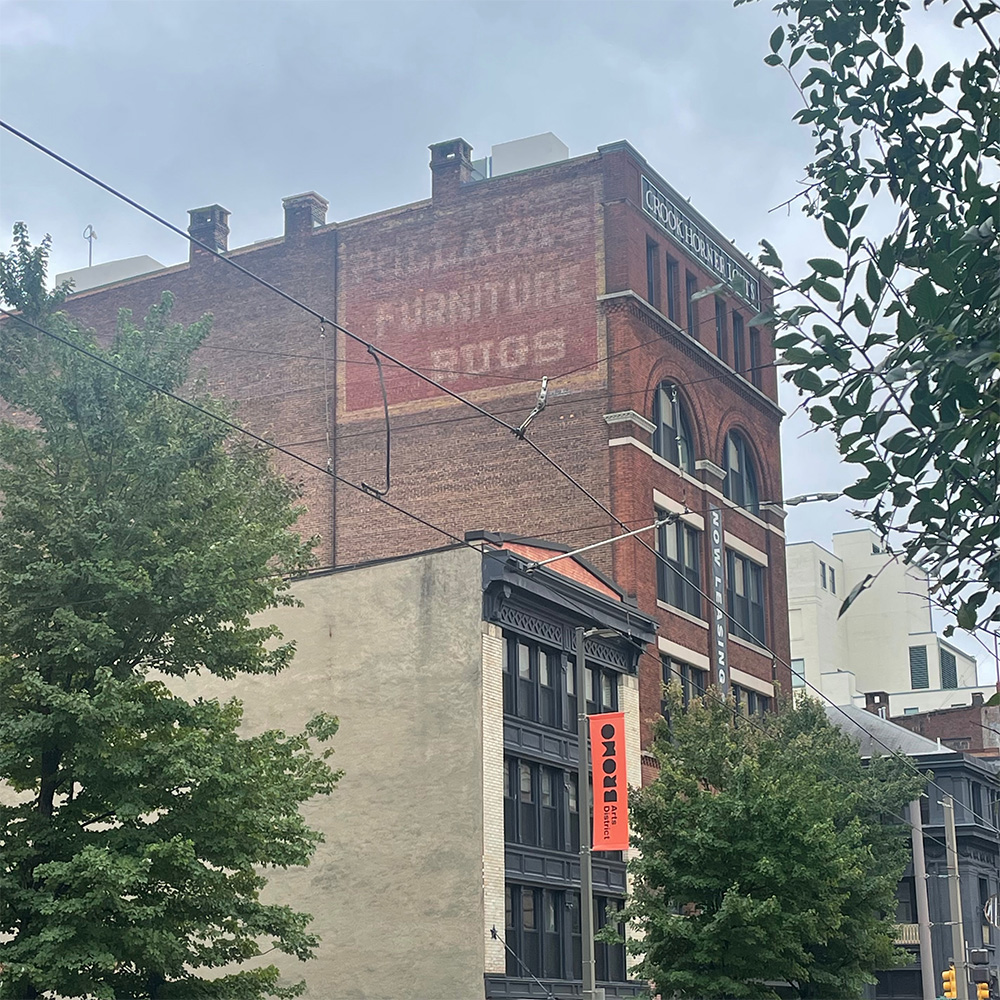
Baltimore’s Ghost Signs
Ghost signs are hand-painted advertisements from the late 19th and early 20th centuries. Across Baltimore, they offer a glimpse into the city’s commercial past, remnants of brands and movements that once filled these streets with energy.
Many of these signs were created during the Depression era by a handful of companies: Globe, Park, Cheverly, Pritchett, and Morgan, primarily as bold advertisements. Today, they’ve become time capsules, slowly disappearing into the fabric of the city.
In partnership with Baltimore Heritage, Downtown Partnership of Baltimore, and a dedicated artist team, Bromo is working to respectfully rehabilitate these historic signs, preserving their character while bringing renewed visibility so they can be appreciated for decades to come.
Thank you to our project partners:
- Muralists: Sam and Tyler from Human Made Signs & Murals
- Ghost Sign Documenters: photographer Lashelle Bynum who’s captured Baltimore’s fading signs for over 20 years; and artist Greg Gannon who specializes in painted signs
- Organization Partnerships: Baltimore Heritage and Downtown Partnership of Baltimore
Curious about the rich history of ghost signs? Read more about what they are and the process of spotting them:
- Ghost Signs – Baltimore Heritage
- Fading History: “Ghost” Signs Evoke Baltimore’s Commercial Past – Baltimore Magazine
- Baltimore woman joyfully haunted by hunt for ‘ghost signs’ – Baltimore Banner
Background Info
According to Bynum’s research, five companies—Globe, Park, Chevery, Prichett, and Morgan—produced the bulk of the colorful and larger-than-life signs, which date back to Depression-era Baltimore. In fact, the most famous ghost sign in Baltimore is the faded, blocked-lettered VOTE AGAINST PROHIBITION at the intersection off South Broadway in that historical hotbed of hooch, Fells Point. Coincidentally, not far away, just up Central Avenue, one of the more visible ghost signs advertises the services of JOSEPH KAVANAGH CO. PRACTICAL COPPERSMITH, a family-run operation that began designing and building distilling equipment in 1866, and then turned to bootlegging during Prohibition.
She thinks about it some more and says she appreciates the moment of discovery of a ghost sign, a kind of merging of the past and present when time seems to momentarily stop.